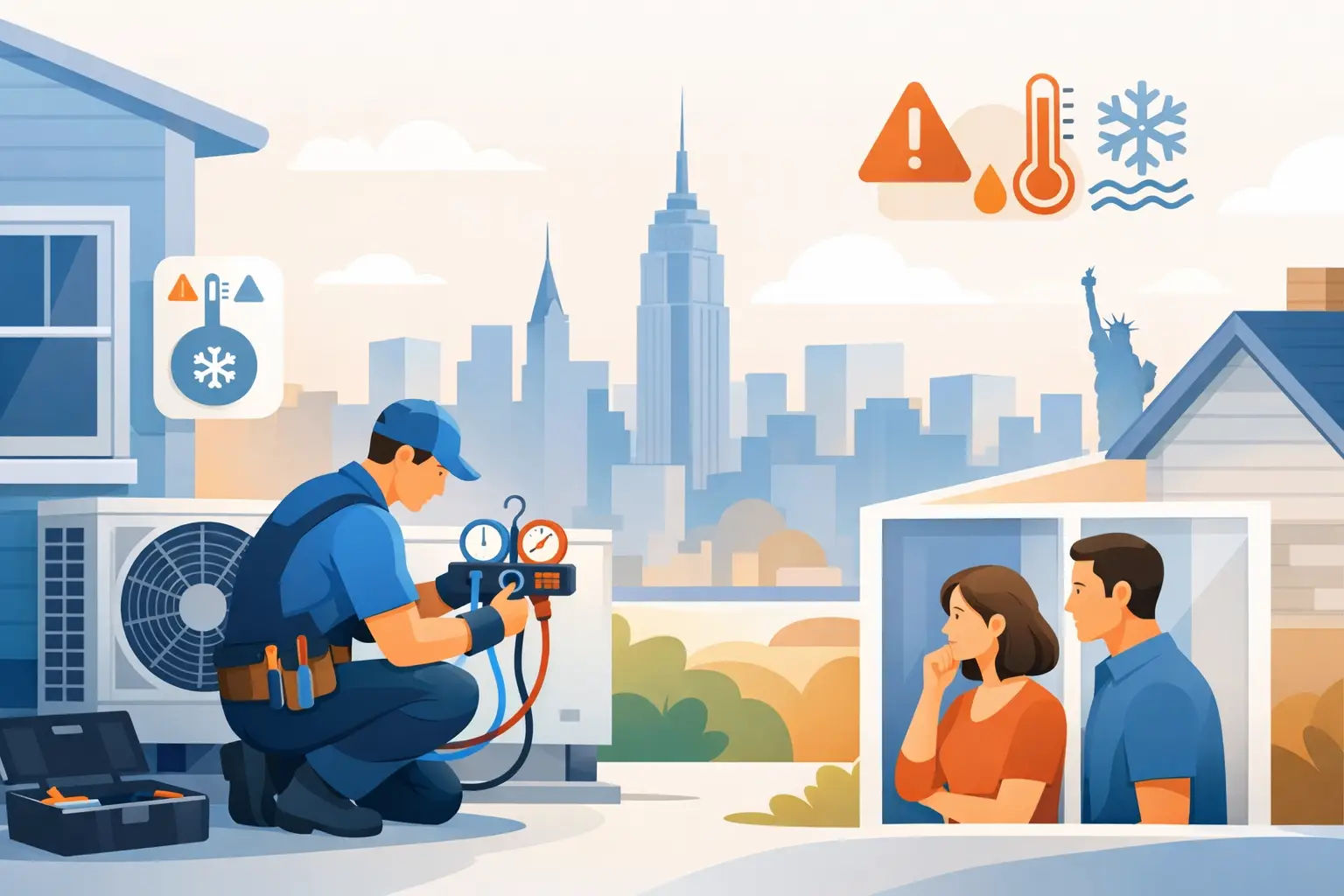
Emergency HVAC Repair Westchester County may be necessary when your heating or cooling system suddenly stops working, develops a serious leak, produces unusual odors, or creates another urgent problem. For homeowners in Westchester County, a heating failure during winter or an air conditioning breakdown during summer can quickly affect indoor comfort. Knowing the warning signs can help you determine when to contact a professional HVAC technician and when a problem may require immediate attention.
What Is an HVAC Emergency?
An HVAC emergency is a heating or cooling problem that requires prompt professional attention. A complete system failure, lack of heat during freezing temperatures, serious water leakage, burning smells, or electrical problems can all indicate an urgent HVAC issue.
While some minor HVAC problems can wait for a scheduled appointment, certain issues should not be ignored.
1. Your HVAC System Stops Working
One of the most obvious reasons to request Emergency HVAC Repair Westchester County is when your heating or cooling system completely stops operating.
Before calling a professional, check simple issues such as your thermostat settings and circuit breaker. If the system still does not turn on, a professional HVAC technician can inspect the equipment and identify the underlying problem.
2. Your Home Has No Heat During Winter
Westchester County winters can bring extremely cold temperatures. Losing heat during winter can quickly become a serious comfort concern, particularly for households with children, older adults, or other vulnerable occupants.
If your furnace or heating system stops producing heat, contact an HVAC professional promptly to determine whether repair or another solution is needed.
3. Your Air Conditioner Stops Cooling
An AC system that suddenly stops cooling can make your home uncomfortable during hot and humid weather.
If the system is running but producing warm air, check the thermostat and air filter first. If the problem continues, professional AC repair in Westchester County may be necessary.
4. You Notice Burning or Electrical Odors
A burning smell coming from an HVAC system should not be ignored. Electrical components, wiring, motors, or other parts may require professional inspection.
If you notice a strong burning or electrical odor, turn off the system if it is safe to do so and contact a qualified HVAC professional.
5. Your HVAC System Is Making Unusual Noises
Loud banging, grinding, squealing, rattling, or other unusual sounds can indicate a mechanical or electrical problem.
Continuing to operate a system that is making severe or unusual noises could potentially worsen the problem. A professional technician can inspect the equipment and determine what needs attention.
6. Your HVAC System Is Leaking Water
Water around an indoor HVAC unit can indicate problems involving drainage, condensation, or other components.
A small amount of condensation can be normal for certain systems, but unexpected or significant water leakage should be investigated. Ignoring a leak may result in water damage or additional HVAC problems.
7. Your HVAC System Has Very Weak Airflow
Weak airflow from your vents can make it difficult for your home to reach the desired temperature.
Possible causes can include a dirty air filter, blocked vents, ductwork problems, blower issues, or other system components. If basic checks do not resolve the problem, professional HVAC service may be needed.
8. Your HVAC System Is Short Cycling
Short cycling occurs when an HVAC system repeatedly turns on and off without completing a normal heating or cooling cycle.
This can increase system wear and may indicate problems involving airflow, thermostat operation, system sizing, or other components. A professional inspection can help identify the cause.
9. Your Energy Bills Suddenly Increase
A sudden and unexplained increase in heating or cooling costs can sometimes indicate that your HVAC system is no longer operating efficiently.
Dirty components, restricted airflow, failing parts, or other issues may cause the system to work harder than necessary. Professional maintenance or repair can help determine the cause.
10. Your HVAC System Requires Frequent Repairs
If your HVAC system repeatedly breaks down, frequent repairs may indicate that the equipment is aging or experiencing ongoing component problems.
A professional HVAC technician can evaluate the system and explain whether repairing the existing equipment or considering replacement makes more sense for your situation.
What Should You Do During an HVAC Emergency?
When an HVAC emergency occurs, start with basic safety checks:
- Check your thermostat settings.
- Check whether the HVAC system has power.
- Inspect the circuit breaker if appropriate.
- Check whether the air filter is heavily dirty.
- Keep vents and registers clear.
- Turn off the system if you notice burning smells, smoke, or other potentially unsafe conditions.
- Contact a qualified HVAC professional when the problem cannot be safely resolved.
Do not attempt complex electrical, gas, refrigerant, or mechanical repairs yourself.
How to Prevent HVAC Emergencies
Although not every HVAC breakdown can be prevented, regular maintenance can help identify developing problems before they become major failures.
Homeowners can help maintain their systems by replacing air filters regularly, keeping outdoor equipment clear, monitoring unusual noises or odors, maintaining proper airflow, and scheduling professional HVAC maintenance.
Seasonal inspections can also help prepare heating and cooling equipment for periods of heavy use.
Why Professional HVAC Repair Matters in Westchester County
Professional HVAC service allows trained technicians to diagnose the underlying cause of a heating or cooling problem instead of simply addressing the visible symptom.
For homeowners in Westchester County, timely HVAC service can help restore comfort and determine whether a system needs repair, maintenance, or replacement.
Rite Temp HVAC provides heating and cooling services designed to help homeowners maintain comfortable indoor environments throughout the year. Whether you are experiencing a heating problem during winter or an AC issue during summer, professional HVAC assistance can help identify the appropriate solution.
Frequently Asked Questions
1. When should I call for emergency HVAC repair in Westchester County?
You should consider prompt professional service when your HVAC system completely stops working, you have no heat during extremely cold weather, you notice burning or electrical odors, there is significant water leakage, or the system is experiencing another potentially serious problem.
2. What are common HVAC emergencies in Westchester County?
Common HVAC emergencies can include complete system failures, loss of heating, AC failure, electrical problems, unusual mechanical noises, significant water leaks, severe airflow problems, and other issues that prevent the system from operating properly.
3. Can I fix an HVAC emergency myself?
Some basic checks, such as adjusting your thermostat or replacing a dirty air filter, may be appropriate for homeowners. However, electrical, gas, refrigerant, and complex mechanical problems should be handled by a qualified HVAC professional.
4. Can regular HVAC maintenance prevent emergency repairs?
Regular maintenance cannot guarantee that a system will never break down, but it can help identify worn or malfunctioning components and address potential problems before they become more serious.
5. How can I avoid HVAC emergencies?
Schedule regular professional maintenance, replace air filters as recommended, keep vents clear, maintain outdoor equipment, and address unusual noises, odors, leaks, or performance changes promptly.
Conclusion
An HVAC emergency can quickly affect your home’s comfort, especially during the extreme temperatures that can occur in Westchester County. Knowing the warning signs can help you recognize when a heating or cooling problem requires professional attention.
If your system stops working, produces unusual odors or noises, leaks water, or cannot properly heat or cool your home, consider contacting a qualified HVAC professional for an inspection.
Regular maintenance and timely repairs can also help keep your heating and cooling system operating reliably throughout the year.
