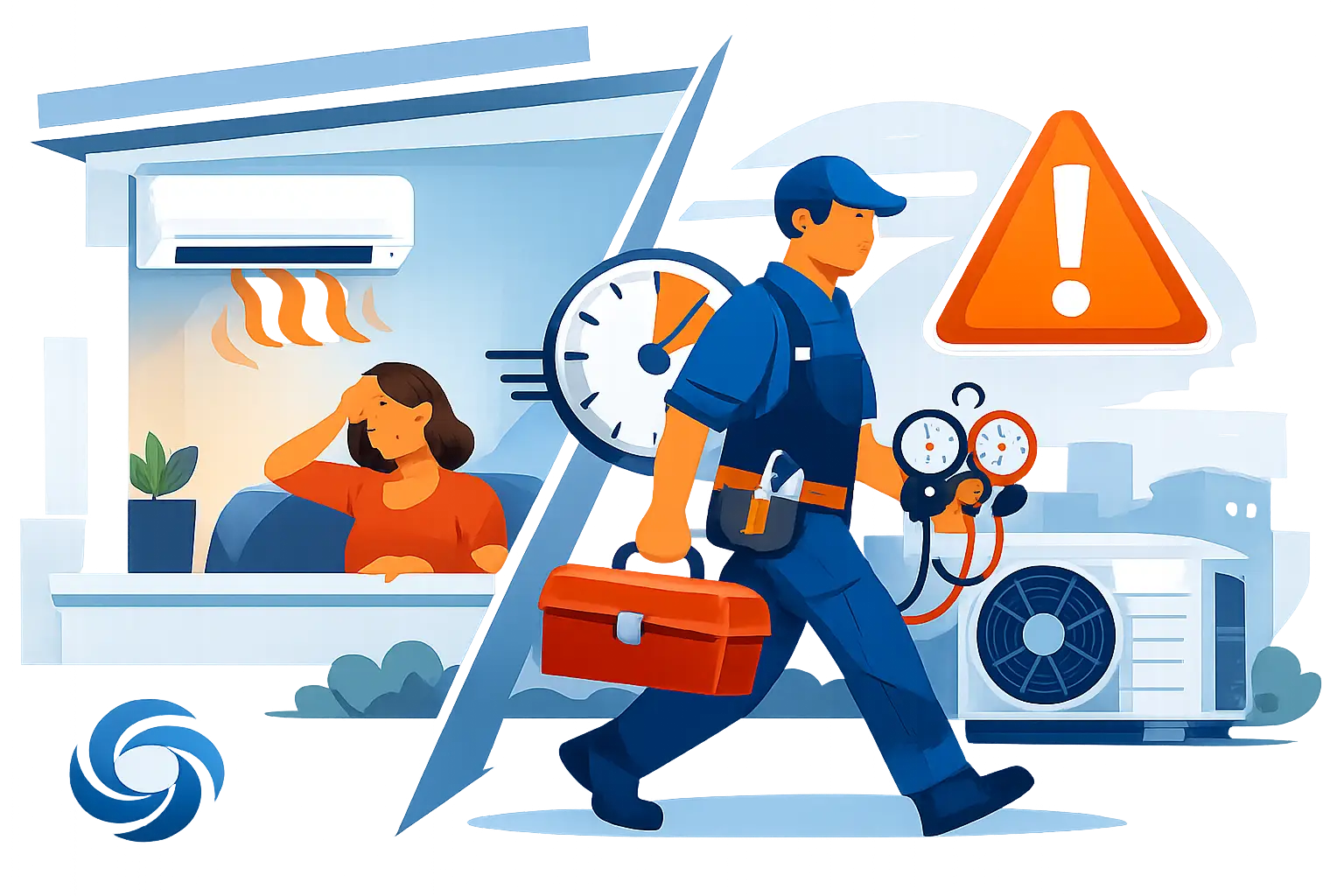
Air conditioning problems rarely happen at a convenient time. A system may stop cooling during a humid New York afternoon, after a long workday, or when your family, tenants, employees, or customers need relief from the heat. Knowing when air conditioning repair can wait and when it requires immediate attention can help protect your comfort, your equipment, and your budget.
Some AC problems have simple causes, such as a dirty air filter or tripped breaker. Others can indicate refrigerant problems, electrical failures, drainage issues, frozen coils, or compressor trouble. The key is to recognize the warning signs, perform only safe basic checks, and contact a qualified HVAC professional when the problem requires expert attention.
Air Conditioning Repair Signs You Shouldn’t Ignore
An air conditioner that runs but does not cool your property properly is a common warning sign. If the thermostat is set correctly and the system has had enough time to operate, you should notice cooler air coming from the vents.
Warm air may be caused by restricted airflow, low refrigerant, a frozen evaporator coil, a dirty outdoor condenser, a failed capacitor, or compressor problems. Because several issues can produce the same symptom, professional diagnosis is important before replacing any components.
Weak airflow is another problem that should not be ignored. A dirty filter can restrict airflow, but blocked vents, damaged ductwork, a failing blower motor, or a dirty coil can also contribute to poor circulation.
If only one room is uncomfortable while the rest of the property cools normally, the problem could involve ductwork, insulation, dampers, zoning, or system capacity. An HVAC technician can inspect the system and determine the actual cause.
Unusual Sounds or Odors
Changes in the sound or smell of your air conditioner can also indicate a developing problem.
Loud banging, grinding, screeching, rattling, or repeated clicking may point to loose components, motor problems, electrical issues, or compressor trouble.
Musty odors can indicate moisture around the evaporator coil, condensate drain, or ductwork. A burning or electrical smell is more urgent. Turn the system off if it is safe to do so and arrange professional service.
Water Around the AC System
Water around an indoor air conditioning unit should not be ignored.
While condensation is a normal part of AC operation, it should drain properly. A clogged condensate drain or other drainage problem can result in water damage, flooring damage, ceiling damage, and potential indoor air quality concerns.
For apartments, offices, and multi-unit properties, addressing a water leak quickly can help prevent the problem from affecting additional areas.
What to Check Before Calling an HVAC Technician
There are several basic checks homeowners can safely perform before scheduling air conditioning repair.
Check the Thermostat
Make sure the thermostat is set to cooling mode and that the desired temperature is lower than the current indoor temperature. If your thermostat uses batteries, check whether they need to be replaced.
Check the Air Filter
A heavily dirty filter can restrict airflow and make your AC work harder. Replace the filter with the correct size and type recommended for your HVAC system.
Check Your Vents
Make sure supply and return vents are open and free from furniture, rugs, boxes, curtains, or other obstructions.
Check the Circuit Breaker
Look at your electrical panel for a tripped breaker. If the breaker trips again after being reset, do not repeatedly reset it. A recurring trip may indicate an electrical problem that requires professional attention.
Inspect the Outdoor Unit
From a safe distance, check that leaves, branches, grass, and other debris are not blocking the outdoor unit. Keep the area around the condenser clear so the system can receive adequate airflow.
Do not open the equipment, handle electrical components, or attempt refrigerant repairs yourself.
Look for Ice
Ice on the refrigerant line or indoor coil can indicate an airflow or refrigerant problem. Turn off the cooling system and contact an HVAC professional rather than continuing to operate a frozen system.
These basic checks may help identify simple issues, but they do not replace professional service when your AC continues to malfunction.
When Is Air Conditioning Repair an Emergency?
Some AC problems require faster attention than others. During extreme summer temperatures, loss of cooling can become more than a comfort issue. Children, older adults, pets, and people with certain medical conditions may be particularly vulnerable to excessive indoor heat.
For businesses, a cooling failure can also affect employees, customers, equipment, inventory, and daily operations.
Consider contacting an emergency HVAC professional when you experience:
- Burning smells, smoke, or sparks
- Electrical problems or repeatedly tripping breakers
- Significant water leaking around HVAC equipment
- Damaged or leaking refrigerant lines
- Complete loss of cooling during extreme heat
- A commercial cooling failure affecting equipment or operations
- Loud or severe mechanical noises from the AC system
If you see smoke, sparks, or signs of fire, turn off the system if it is safe to do so and contact emergency services when necessary.
What Happens During Professional AC Repair?
A reliable air conditioning repair service should begin with diagnosis rather than immediately replacing a part.
An HVAC technician may inspect the thermostat, electrical components, airflow, indoor and outdoor coils, condensate drainage, blower components, and overall system operation. Depending on the problem, the technician may also take temperature measurements and check other operating conditions.
This diagnostic process matters because different problems can produce similar symptoms.
For example, an AC system that repeatedly turns on and off may have an airflow restriction, thermostat problem, refrigerant issue, equipment sizing concern, or electrical component failure. Replacing a random component without finding the root cause may not solve the problem.
Before work begins, ask the technician to explain:
- What caused the problem
- What repair is recommended
- How much the repair will cost
- Whether other components show signs of wear
- Whether the repair is expected to restore reliable operation
- Whether replacement should be considered
Clear communication can help homeowners make informed decisions about their HVAC systems.
Should You Repair or Replace Your AC?
Not every AC problem means you need a new system.
Repair may make sense when the equipment is relatively new, properly maintained, and experiencing a repair that is reasonable compared with the system’s remaining useful life.
Replacement may be worth considering when the system requires frequent repairs, has a major compressor problem, has significant efficiency issues, or is approaching the end of its expected service life.
Age alone should not determine the decision. Consider the repair cost, equipment condition, efficiency, warranty coverage, maintenance history, and expected remaining lifespan.
A qualified HVAC contractor can explain your options and help you understand the differences between repairing your current system and installing a replacement.
How to Prevent Future AC Problems
Regular maintenance is one of the most practical ways to reduce unexpected cooling problems.
Professional AC maintenance can include:
- Inspecting electrical connections
- Checking system performance
- Cleaning important components
- Checking the condensate drain
- Inspecting coils
- Checking airflow
- Replacing or recommending appropriate filters
- Identifying worn components
- Looking for potential problems before peak cooling season
Homeowners can also help maintain their systems by changing filters regularly, keeping outdoor equipment clear, keeping vents unobstructed, and addressing unusual noises, odors, leaks, or cooling problems promptly.
For commercial properties and multi-family buildings, a scheduled maintenance plan can help property managers stay ahead of repairs and reduce the risk of major cooling interruptions during periods of high demand.
When to Call Rite Temp HVAC for AC Repair
When your air conditioner starts behaving differently, don’t ignore the warning signs. A system that is blowing warm air, leaking water, making unusual noises, or repeatedly shutting down may need professional attention.
Rite Temp HVAC LLC provides air conditioning repair and HVAC services for homeowners and properties throughout New York. Our technicians can evaluate AC problems, explain the available repair options, and help restore dependable cooling.
For urgent cooling problems, timely professional service can help protect your equipment, property, and indoor comfort.
Frequently Asked Questions
1. How do I know if my AC needs immediate repair?
Your AC may require immediate professional attention if it stops cooling completely, produces a burning or electrical smell, repeatedly trips a breaker, leaks significant amounts of water, makes severe noises, or creates another potentially unsafe condition.
2. Can I fix my air conditioner myself?
Homeowners can safely perform basic checks such as adjusting the thermostat, replacing a dirty filter, checking open vents, and inspecting the circuit breaker. Electrical, refrigerant, compressor, and complex mechanical repairs should be handled by a qualified HVAC professional.
3. Why is my AC running but not cooling?
An AC that runs without producing enough cool air may have restricted airflow, a dirty coil, low refrigerant, a frozen evaporator coil, electrical problems, or another component issue. Professional diagnosis is recommended because several problems can cause the same symptom.
4. How often should I have my air conditioner serviced?
Annual professional AC maintenance is commonly recommended, particularly before the cooling season. Regular maintenance can help identify developing problems, maintain performance, and prepare the system for periods of heavy use.
5. Should I repair or replace my air conditioner?
The decision depends on factors such as the system’s age, repair cost, efficiency, maintenance history, condition, warranty coverage, and expected remaining lifespan. An HVAC professional can inspect the system and explain whether repair or replacement is appropriate.
Conclusion
Air conditioning problems should not always be treated as emergencies, but certain warning signs require prompt attention. Burning odors, electrical problems, significant leaks, complete cooling failure, and severe mechanical noises are reasons to contact a qualified HVAC professional.
Addressing smaller problems early and scheduling regular maintenance can help reduce unexpected breakdowns and keep your cooling system operating efficiently.
If you need professional air conditioning repair in New York, Rite Temp HVAC LLC can help diagnose the problem and provide practical solutions for reliable year-round comfort.
