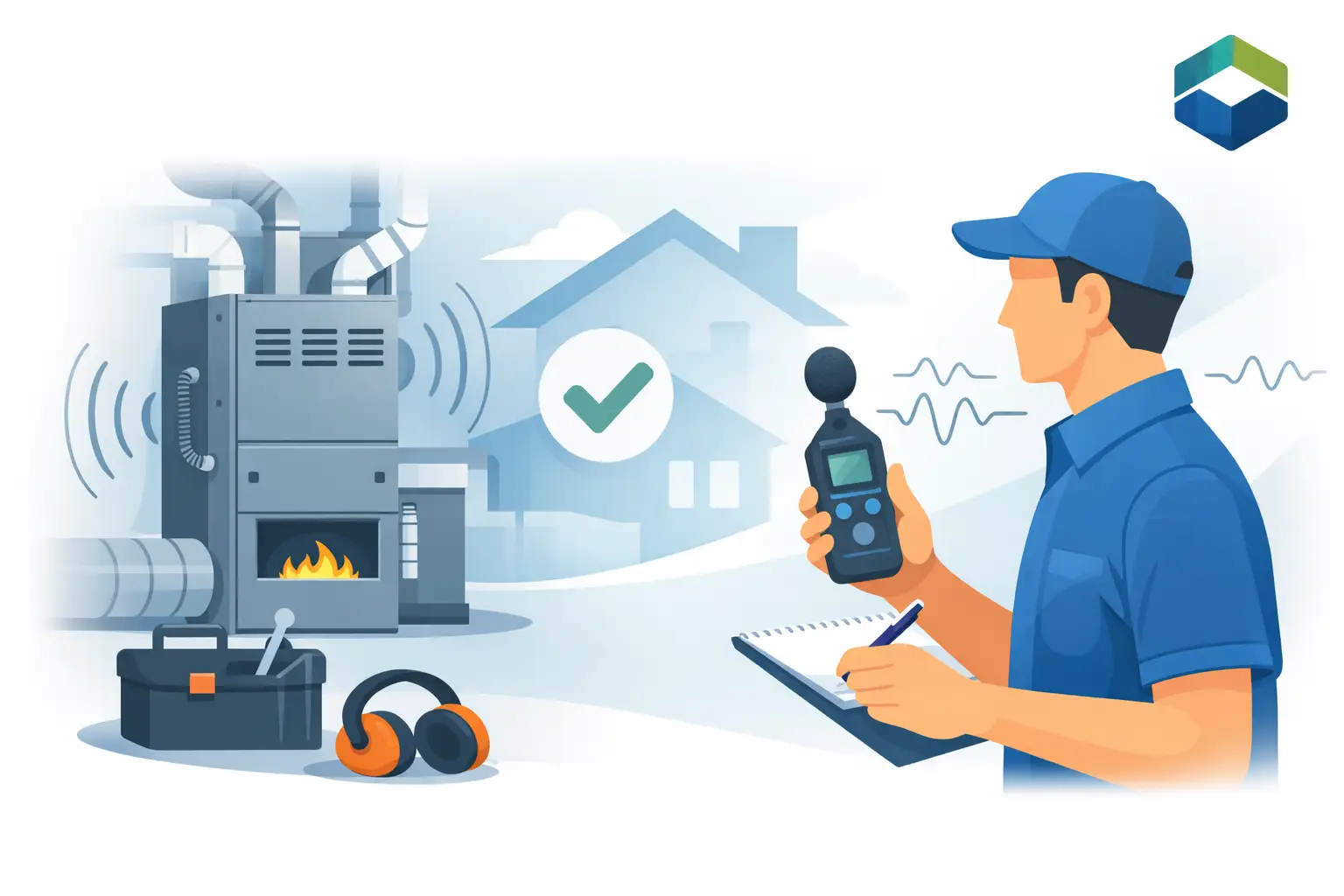
A furnace does not need to be silent to be healthy. You will normally hear a soft rush of air, a brief click as it starts, and the blower running during a heating cycle. But a new bang from the basement, a persistent rattle in a utility closet, or a high-pitched squeal at night deserves attention. Knowing how to reduce furnace noise starts with identifying the sound, because the right solution depends on what is making it.
For New York homeowners, landlords, and property managers, noise can be more than an annoyance. It may point to restricted airflow, loose components, aging equipment, or a combustion-related problem that should not be ignored. Start with the safe checks below, then call a licensed HVAC professional when the sound is loud, worsening, or paired with heating problems.
How to Reduce Furnace Noise by Identifying the Sound
A furnace makes several different noises throughout a normal cycle. The key is whether the sound is new, unusually loud, repeated, or accompanied by odors, reduced heat, short cycling, or higher energy bills.
A rattling or vibrating sound often comes from a loose access panel, unsecured ductwork, a dirty filter that is making the system work harder, or a blower assembly that needs service. A metallic scraping sound can indicate a blower wheel rubbing its housing or a failing motor bearing. Do not keep running the furnace to see if it goes away. Continued operation can turn a repairable issue into motor or blower damage.
Banging is common when sheet-metal ducts expand and contract as warm air moves through them. This is usually not dangerous, though it can be disruptive in bedrooms or offices. A single boom when the burners ignite, however, is different. Delayed ignition can allow gas to build up briefly before lighting. That calls for professional service as soon as possible.
Squealing, chirping, or whining may point to a worn belt on an older belt-driven system, dry motor bearings, or a blower motor beginning to fail. Humming can be normal in small amounts, but a loud electrical hum, buzzing, or repeated clicking can signal a control board, capacitor, transformer, or ignition issue.
If you hear a loud boom, smell gas, notice soot, see a yellow or flickering burner flame, or a carbon monoxide alarm sounds, leave the building if necessary and follow your gas utility’s emergency instructions. Do not try to repair a gas furnace yourself.
Start With the Simple, Safe Checks
Before assuming the furnace itself has failed, check the parts of the system you can safely access. Turn the thermostat off before opening or touching any furnace panel. If a check requires removing wiring, accessing burners, or working inside the cabinet, stop and schedule service.
First, inspect the air filter. A clogged filter restricts airflow and can make the blower louder, create whistling at return grilles, and cause the furnace to overheat and cycle off too soon. Replace a disposable filter if it is visibly dirty or follow the replacement interval recommended for your filter type. Avoid choosing the most restrictive filter simply because it captures more particles. Some high-density filters can strain a system that was not designed for them. The right filter should balance air quality with proper airflow.
Next, make sure supply registers and return grilles are open and unobstructed. Furniture, rugs, curtains, storage boxes, and closed interior doors can interfere with airflow. It is tempting to close vents in unused rooms to save money, but many forced-air systems are not designed for that restriction. The result can be louder airflow, uneven temperatures, and added pressure on the blower.
Check the furnace access panels as well. A panel that is not seated correctly can rattle every time the blower starts. With the thermostat off, confirm that exterior screws are present and snug. Do not overtighten them or alter the furnace cabinet.
Reduce Duct Noise Without Restricting Airflow
If the furnace sounds normal near the unit but the noise travels through ceilings and walls, the duct system may be the real source. Ducts can pop as they warm up, whistle when air is forced through an undersized opening, or vibrate when sections are loose.
Visible duct sections in a basement, mechanical room, or attic may benefit from professional sealing, added supports, or insulation. Insulation can reduce sound transmission and heat loss, particularly in unconditioned spaces. It will not solve every noise issue, though. If the duct is undersized or the blower speed is set incorrectly, wrapping the duct alone will not correct the underlying pressure problem.
Whistling usually deserves an airflow evaluation. It may occur at a restrictive filter, a return grille that is too small, a partially blocked duct, or a supply register with an aggressive airflow pattern. A technician can measure static pressure, inspect duct sizing, and determine whether an adjustment, duct modification, or return-air improvement is the sensible long-term repair.
For popping ducts, an HVAC professional may recommend reinforcing certain sections, adjusting duct connections, or adding materials that limit metal-on-metal movement. The best option depends on access and the age of the ductwork. In an older home, a targeted repair can be more practical than opening finished walls to modify an entire run.
When Furnace Noise Means It Is Time for Repair
Some sounds are clear service calls, especially when they begin suddenly. Shut the system down and arrange professional inspection if you hear grinding, scraping, repeated loud banging, electrical buzzing, or a blower that continues making noise after the heating cycle should have ended.
A furnace that starts and stops frequently can also become noisy because components are cycling far more often than they should. The cause might be a dirty flame sensor, blocked venting, an overheating limit switch, thermostat placement, restricted airflow, or an oversized system. These are not problems to diagnose by replacing random parts. A proper inspection looks at the full heating cycle and identifies why the furnace is behaving that way.
Age matters, too. An older furnace can become louder as motor mounts wear, blower wheels collect debris, bearings deteriorate, and cabinet insulation breaks down. Repair may still be the right value when the system is otherwise reliable. If repair needs are frequent, efficiency is poor, or replacement parts are becoming difficult to source, a quieter modern furnace may be worth considering. Variable-speed blowers, when properly designed and installed, can run at lower speeds for longer periods and often produce a more even, quieter comfort level than single-stage equipment.
Avoid Quick Fixes That Create Bigger Problems
Do not line the inside of a furnace cabinet with household soundproofing material, block vents, cover combustion-air openings, or stuff insulation around flues and electrical components. These shortcuts can interfere with airflow, create overheating risks, and make future service unsafe.
It is also wise to avoid repeatedly resetting a furnace that locks out or keeps tripping a breaker. A reset may temporarily restore heat, but it does not explain the failure. When a heating system is making unusual noise and not operating normally, a qualified technician can inspect it safely and give you a clear recommendation before a small problem becomes a no-heat emergency.
Keep Your Heating System Quieter Over Time
Annual maintenance is one of the most reliable ways to prevent avoidable furnace noise. During a professional tune-up, the technician can inspect the blower, motor, burner operation, electrical connections, drain system, venting, filter condition, and safety controls. They can also catch loose hardware and airflow concerns before they become loud enough to disrupt your home or business.
For multi-family properties and commercial spaces, maintenance is especially valuable because noise complaints may originate in shared ductwork, rooftop equipment, or mechanical rooms rather than one tenant’s furnace. Addressing the source protects comfort across the property and helps avoid unexpected downtime during a cold spell.
Your comfort should not come with a constant rattle, whistle, or bang. If the sound is new, severe, or tied to uneven heat, Rite Temp HVAC LLC can provide an honest assessment and a repair plan focused on safe, lasting performance.