
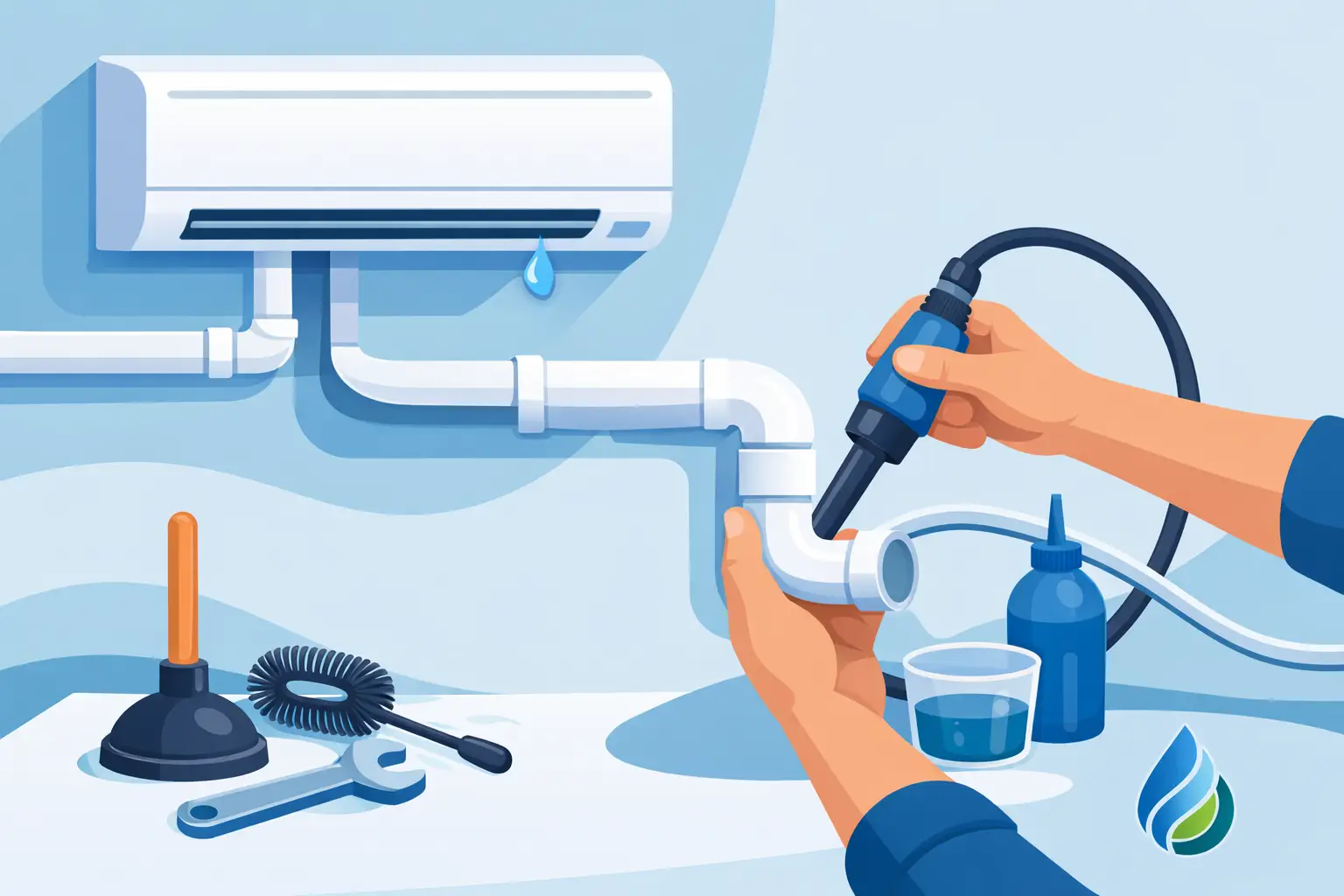
A small puddle near your indoor AC unit can become a ceiling stain, damaged flooring, or a system shutdown surprisingly fast. Knowing how to clean condensate drain lines can help prevent those problems, especially during New York’s humid cooling season when your air conditioner is removing large amounts of moisture from the air.
Your condensate drain is simple in principle: as warm indoor air passes over the cold evaporator coil, moisture collects and flows into a drain pan, then through a PVC line to a safe discharge point. But dust, slime, algae-like growth, and debris can narrow or block that line. The result is water going where it does not belong.
What a Clogged Condensate Drain Looks Like
Not every drain problem starts with a visible flood. Many homeowners first notice a musty smell near the air handler, weak cooling, or an AC system that turns on but stops shortly afterward. Modern systems may have a float safety switch that shuts off cooling when water rises in the drain pan. That switch is doing its job, but it is signaling a problem that needs attention.
Other common signs include water around the indoor unit, dripping from a ceiling vent or closet-mounted air handler, rust or standing water in the auxiliary pan, and visible mold-like buildup around the drain outlet. A bubbling or gurgling sound from the drain line can also point to restricted flow.
If water is already leaking through a ceiling, near electrical equipment, or into a finished commercial space, turn the system off at the thermostat and contact an HVAC professional promptly. Cleaning a drain line is often straightforward, but water damage can escalate quickly.
Before You Clean the Condensate Drain Line
Start by turning off the cooling system at the thermostat. For added protection, switch off power to the indoor air handler or furnace at its service switch or circuit breaker. This prevents the equipment from running while panels are open and helps avoid an overflow if the drain pan is full.
Locate the indoor unit and follow the white PVC drain pipe leaving the evaporator coil area. Most systems have a vertical capped opening, often called a cleanout or vent tee, near the unit. The pipe may then run to a floor drain, utility sink, exterior wall, or condensate pump.
You will usually need a wet/dry vacuum, a towel or shallow pan, warm water, distilled white vinegar, and a small funnel. A shop vacuum is especially useful because it removes the clog rather than simply pushing debris farther down the pipe. Do not use a wire hanger, metal rod, or high-pressure air inside a PVC condensate line. Those methods can puncture fittings, disconnect a joint, or force dirty water back into the equipment.
How to Clean Condensate Drain in 5 Steps
1. Check the drain pan and safety switch
Remove the access panel only if it is designed for homeowner access and can be safely reinstalled. Look for standing water in the primary drain pan beneath the evaporator coil. Place towels around the unit before doing anything else.
If your system has a float switch, it may be mounted in the drain pan or on the drain line. Carefully lift or inspect it for visible dirt. Do not bypass the switch to keep the AC running. It is a safety device designed to prevent overflow.
2. Find the exterior drain outlet
Walk outside and locate where the condensate line terminates. It is often a small PVC pipe near the outdoor condenser, a foundation wall, or a utility area. In some apartments, condos, and commercial buildings, the drain may terminate at a plumbing connection or condensate pump instead, so an exterior outlet may not be present.
Check for mud, leaves, insect nests, or debris around the opening. Do not seal or cap the outlet. The line needs to remain open for proper drainage.
3. Vacuum the line from the discharge end
Create a reasonably tight seal between the wet/dry vacuum hose and the end of the drain pipe. A towel wrapped around the connection can help. Run the vacuum for about one to two minutes.
You may pull out dark water, sludge, and small debris. That is common, particularly in systems that have not received seasonal maintenance. Empty the vacuum carefully and clean it afterward.
This method is generally safer than trying to clear the blockage from the indoor cleanout. If the line does not have an accessible outdoor end, a technician can use the proper equipment to clear and test it without risking a mess inside the property.
4. Flush the cleanout with vinegar
Return to the indoor unit and remove the cap from the drain cleanout. Slowly pour about one cup of distilled white vinegar into the opening using a funnel. Vinegar helps reduce the organic buildup that commonly develops in condensate piping.
Let it sit for 20 to 30 minutes, then flush it with a small amount of warm water. Watch for water flowing freely from the drain outlet. If it drains slowly, backs up, or appears in the pan, stop and schedule service.
Avoid using bleach in a condensate line unless your equipment manufacturer specifically recommends it. Bleach can create harsh fumes, may damage certain components, and should never be mixed with vinegar or any other cleaner. Drain cleaners made for plumbing clogs are also a poor choice because they can damage the system and create a safety hazard.
5. Restore power and confirm normal drainage
Replace the cleanout cap, reinstall any access panel, and restore power. Run the air conditioner for 15 to 30 minutes on a humid day, then check the drain outlet or condensate pump operation. You should see a steady, modest drip from an exterior discharge line while the system is actively dehumidifying.
A lack of water outside is not always a problem. On a dry day, the system may produce very little condensate. But if the unit shuts down again, the pan fills, or water continues to leak, the blockage may be deeper in the line or connected to another issue.
When the Problem Is More Than a Clog
A drain line can appear blocked when the real issue is a dirty evaporator coil, an improperly installed drain trap, a disconnected pipe, or a failed condensate pump. High-efficiency furnaces also produce condensate, but their drainage setup is different from an AC evaporator drain and may require professional diagnosis.
Drain traps deserve special attention. Many air handlers need a properly configured trap to overcome negative air pressure and allow water to flow. If the trap is missing, dry, cracked, or incorrectly installed, the system can struggle to drain even after the line is cleaned. This is not a place for guesswork, particularly in attic installations where one overflow can damage multiple rooms below.
For businesses and property managers, recurring drainage problems can be more complicated. Multiple fan coil units, long horizontal runs, shared plumbing connections, and condensate pumps all increase the chance of a drainage issue affecting tenants or operations. A professional maintenance plan helps catch these conditions before a busy summer weekend or a tenant complaint.
How Often Should You Clean It?
For most homes, checking and flushing the condensate drain at the beginning of each cooling season is a sensible preventive step. Homes with pets, heavy dust, high humidity, or frequent AC use may benefit from a midseason check as well.
Still, a drain that clogs repeatedly is not something to keep treating with vinegar every few weeks. Repeated buildup often means the system needs coil cleaning, drain-line correction, pump service, or a closer look at indoor air filtration. The right repair protects both your equipment and the areas around it.
Rite Temp HVAC LLC helps homeowners, landlords, and businesses throughout New York identify the cause of recurring AC drainage issues and provide dependable repairs without pressure or guesswork. If your system is leaking, shutting down, or leaving water where it should not, timely service can prevent a minor maintenance issue from becoming a costly restoration project.
A clear condensate drain is easy to overlook because it works quietly in the background. Giving it a few minutes of attention before peak cooling weather is one of the simplest ways to protect your comfort, your air conditioner, and your property.