A heating system replacement rarely happens at a convenient time. The heat may be uneven, repair bills may be adding up, or an aging unit may fail during a New York cold snap. When comparing boiler vs furnace heating, the right answer is not simply which system is newer or more efficient. It depends on how your property is built, what equipment is already in place, and what kind of comfort you expect every day.
A boiler and a furnace can both keep a home or business warm reliably when properly sized, installed, and maintained. But they deliver heat in very different ways. Understanding those differences can help you make a confident investment rather than choosing based on a quick sales pitch or the lowest upfront number.
Boiler vs Furnace Heating: The Basic Difference
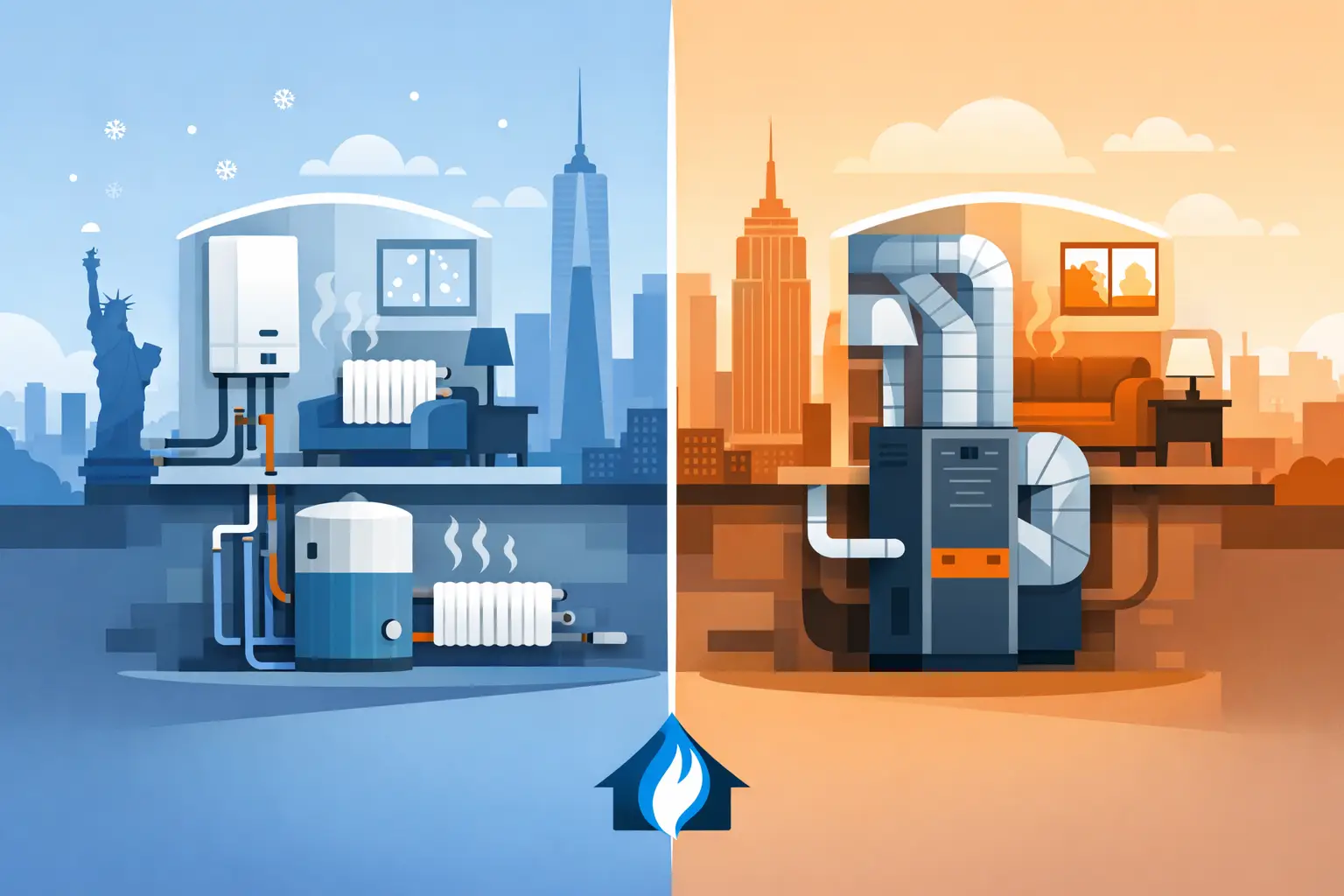
A boiler heats water and circulates it through pipes to radiators, baseboard units, or radiant floor tubing. Depending on the system, the boiler may use natural gas, oil, propane, or electricity. The heat then radiates from those surfaces into each room.
A furnace heats air and sends that warm air through ductwork using a blower. Furnaces commonly run on natural gas, oil, propane, or electricity. Warm air exits through supply vents, while return vents bring cooler air back to the system to be reheated.
That basic distinction – water-based heat versus air-based heat – affects comfort, installation options, maintenance needs, and how easily the system can handle air conditioning.
Why Many Homeowners Prefer Boiler Heat
Boilers are common throughout older New York homes, multifamily buildings, and properties built before central ductwork became standard. Many people associate radiator or baseboard heat with a steady, comfortable warmth, and there is a good reason for that.
Because a boiler heats surfaces and objects rather than blowing warm air into a room, the heat often feels more even and less drying. There is no furnace blower cycling on and off, so operation can be quieter. Radiant floor systems, in particular, provide consistent warmth from the ground up – a welcome benefit in bathrooms, entryways, and living areas with cold floors.
Boiler systems also do not require ducts. That can be a major advantage in a brownstone, historic home, finished basement, or building where adding large duct runs would be disruptive or expensive. Hydronic heating is generally a strong choice when the property already has serviceable piping and radiators or when a renovation includes radiant-floor installation.
Modern high-efficiency condensing boilers can provide excellent fuel efficiency. However, a boiler’s real performance depends on the entire system. Old, uninsulated pipes, poorly balanced radiators, failing circulator pumps, or improper controls can waste energy even when the boiler itself is efficient.
Boiler considerations before you replace
A boiler can be an excellent long-term system, but it is not maintenance-free. It needs periodic professional service to check combustion, water pressure, expansion tanks, circulators, valves, venting, and safety controls. A leak from an aging pipe or radiator valve can also cause water damage if it is not addressed promptly.
Another consideration is cooling. A boiler only provides heat. If your home does not have ductwork, you will need a separate air conditioning solution, such as ductless mini-splits, high-velocity cooling, or a dedicated central air system. That does not make a boiler the wrong choice, but it should be part of the total project budget.
When a Furnace Makes More Sense
A furnace is often the practical choice for homes and businesses that already have a duct system in good condition. Because the same ducts can distribute heated and cooled air, a furnace paired with a central air conditioner can create a straightforward whole-home comfort system.
Furnaces generally heat spaces quickly. Once the thermostat calls for heat, the blower distributes warm air throughout the building. For people who prefer a faster temperature response, that can be appealing. Modern variable-speed blowers can also run at lower speeds for longer periods, helping improve temperature consistency and reduce the abrupt rush of air often associated with older furnaces.
A ducted system can support more than heating and cooling. It can also accommodate filtration, humidification, dehumidification, and certain indoor air quality equipment. For households managing dust, pet dander, or seasonal allergies, that flexibility is valuable when the system is designed correctly.
Furnace considerations before you replace
Ductwork is both a furnace system’s strength and one of its biggest variables. Leaky, undersized, poorly insulated, or poorly designed ducts can cause uneven rooms, excessive noise, and higher utility bills. Installing a high-efficiency furnace without evaluating the ducts may leave the underlying comfort problem unresolved.
Furnaces also move air, which means filters need regular attention. A clogged filter can restrict airflow, strain the equipment, and reduce comfort. The blower, burners, heat exchanger, condensate drain on high-efficiency models, and safety controls should be inspected during annual maintenance.
For gas furnaces, the heat exchanger deserves special attention. A damaged heat exchanger can create a serious safety concern. If you notice unusual odors, soot, repeated shutdowns, a yellow burner flame, or a carbon monoxide alarm, turn the system off if it is safe to do so and arrange professional service immediately.
Comfort, Efficiency, and Operating Cost
There is no universal winner in boiler vs furnace heating. A properly installed high-efficiency boiler can be exceptionally economical, and so can a properly installed high-efficiency furnace. Fuel type, local utility rates, insulation levels, thermostat settings, building size, and equipment condition all influence your actual monthly cost.
Comfort often comes down to personal preference and building layout. Boilers provide gradual, quiet, radiant warmth. Furnaces provide quicker heating and can condition the air through a single ducted system. In a home with large open spaces, high ceilings, or rooms far from the mechanical equipment, either system may need careful zoning and design to prevent hot and cold spots.
Efficiency ratings matter, but they are not the only number that matters. A high-efficiency furnace or boiler should be correctly sized through a professional load calculation. An oversized system can short-cycle, wear components faster, and fail to deliver the expected savings. A system that is too small may run continuously during extreme weather and still struggle to maintain temperature.
Should You Convert From One System to the Other?
Conversion is possible, but it is usually a larger decision than replacing like for like. Changing from a boiler to a furnace may require new ductwork, vents, returns, electrical work, and space for an indoor air handler. Changing from a furnace to a boiler may require piping, radiators or baseboards, circulation equipment, and a separate plan for air conditioning.
For that reason, keeping the existing system type is often the most cost-effective route when the distribution system is in good condition. Replacing an outdated boiler while retaining sound radiators and piping can make sense. So can installing a new furnace while repairing and sealing usable ductwork.
A conversion may be worthwhile during a major renovation, a gut remodel, or when the existing distribution system is beyond practical repair. It may also make sense when a property owner has specific goals, such as radiant floor comfort, central filtration, or a comprehensive heating and cooling redesign.
Questions to Ask Before Choosing a System
Before approving an installation, ask whether the contractor has evaluated your home’s heat loss, existing ducts or piping, ventilation, fuel availability, and cooling needs. Ask what efficiency rating is appropriate for your property, what maintenance the system will require, and whether any upgrades are needed to support the new equipment.
You should also ask for a clear explanation of the estimate. It should identify the equipment being installed, the scope of labor, necessary permits where applicable, warranty details, and any recommended repairs to ducts, piping, venting, or controls. Transparent recommendations give you room to make the right decision for your budget and long-term plans.
For homeowners and property managers in New York City, Westchester, Long Island, and Southern Connecticut, local experience matters. Older homes, multifamily buildings, tight mechanical spaces, and demanding winters all require careful planning rather than one-size-fits-all equipment recommendations.
The Best Heating System Is the One Designed for Your Property
Choose a boiler when you value quiet radiant comfort, already have a well-maintained hydronic system, or want to add radiant heat during a renovation. Choose a furnace when usable ductwork is already present, fast heating and central air are priorities, or you want integrated filtration and air quality options.
Most importantly, do not wait until a complete failure forces a rushed choice. If your heating system is noisy, unreliable, uneven, or increasingly expensive to repair, a professional evaluation can show whether a targeted repair, maintenance visit, or planned replacement will protect your comfort before the next cold night does.