A hot afternoon is the worst time to learn that your AC has been working harder than it should. An air conditioning tuneup gives your system the attention it needs before minor wear turns into weak airflow, rising utility bills, water leaks, or a complete shutdown. For homeowners, landlords, property managers, and businesses, preventative service is often the most practical way to protect comfort when summer demand is at its highest.
At Rite Temp HVAC LLC, we approach maintenance with a simple goal: identify what needs attention, explain it clearly, and help you get the best possible performance from the equipment you already own. A tuneup is not a sales pitch. It is a professional inspection and service visit designed to improve reliability, efficiency, and peace of mind.
Why an Air Conditioning Tuneup Matters
Your air conditioner operates under demanding conditions. It moves heat from indoors to outdoors, circulates large volumes of air, manages moisture, and relies on electrical components that cycle repeatedly throughout the day. Even a system that appears to be cooling normally can develop issues that quietly affect performance.
A clogged filter can restrict airflow. Dirt on the outdoor coil can make it harder for the system to release heat. A loose electrical connection can create unnecessary strain. A partially blocked condensate drain can lead to water damage or a system shutdown. None of these problems necessarily starts with a dramatic symptom, but each can become more expensive if ignored.
Regular maintenance also gives a technician the opportunity to spot parts that are wearing out before they fail during a heat wave. That matters in New York City, Westchester, Long Island, and Southern Connecticut, where a broken AC can quickly disrupt a home, rental property, office, restaurant, or retail space.
What a Professional Air Conditioning Tuneup Includes
The exact work depends on your equipment, its age, and the condition in which it is found. Central air systems, heat pumps, ductless mini-splits, and commercial units all have different service needs. Still, a thorough tuneup should go far beyond replacing a filter and glancing at the thermostat.
Inspection of Cooling Performance
A technician begins by checking how the system starts, runs, and shuts down. This includes verifying thermostat operation, measuring temperature differences across the system, and confirming that airflow feels appropriate at supply vents. If the system is short-cycling, running continuously, or struggling to reach the set temperature, those clues help narrow down the cause.
Comfort is not only about cold air. Proper performance also involves even temperatures from room to room, manageable humidity, and reasonable operating noise. A system may be producing cool air while still wasting energy or failing to serve parts of the building effectively.
Electrical and Mechanical Checks
Air conditioning equipment depends on capacitors, contactors, wiring, motors, relays, and safety controls. During maintenance, these components should be inspected for wear, overheating, corrosion, loose connections, and unusual operation.
Technicians also check moving parts, including blower and condenser fan motors. Addressing a deteriorating electrical component early can help avoid an inconvenient no-cool call later. If a repair is recommended, you should receive a straightforward explanation of what was found, why it matters, and what your options are.
Coil, Filter, and Airflow Service
Airflow is central to efficient cooling. A dirty air filter, blocked return grille, neglected indoor coil, or debris-covered outdoor condenser can all force the equipment to work longer and harder. During a tuneup, the technician evaluates these areas and cleans accessible components as appropriate.
Homeowners should continue changing or cleaning filters between professional visits according to the filter type, household conditions, and manufacturer guidance. Homes with pets, construction dust, allergies, or frequent system use may need more frequent filter attention. A clean filter is one of the simplest ways to support better airflow and healthier indoor air.
Outdoor units also need breathing room. Leaves, grass clippings, mulch, and overgrown plants can restrict airflow around the condenser. Keeping the area clear helps, but avoid bending coil fins or using high-pressure water, which can cause damage.
Condensate Drain and Moisture Control
Air conditioners remove moisture as they cool. That water must drain safely away through a condensate line. When the drain becomes clogged by algae, sediment, or debris, water can back up into the system or overflow near the air handler.
A professional tuneup includes checking the drain system and related safety switches. This is especially valuable for attic air handlers, closets, utility rooms, and commercial spaces where an unnoticed leak can damage ceilings, flooring, inventory, or finished walls.
Refrigerant and System Condition Assessment
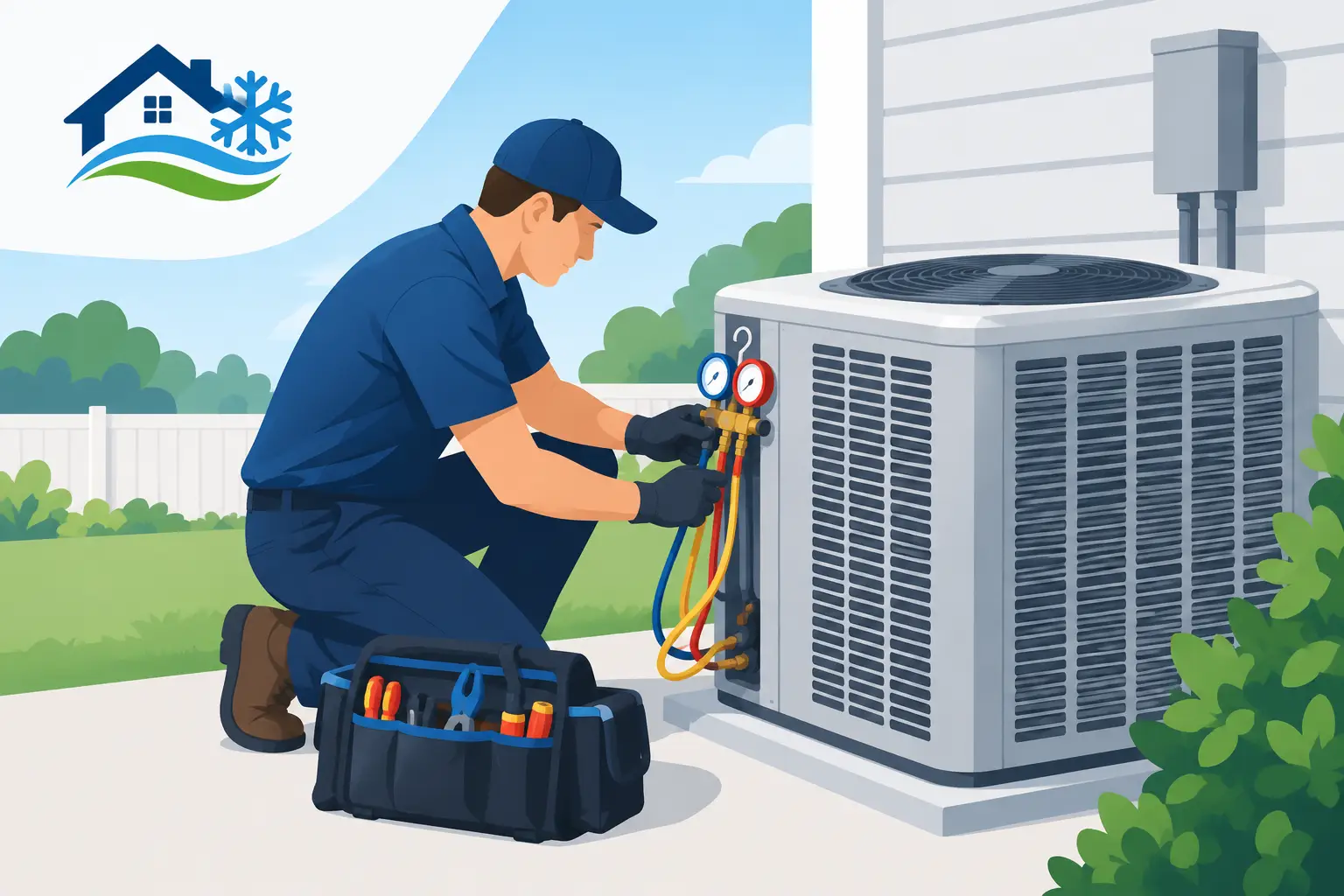
Refrigerant is not fuel that an air conditioner simply uses up. A properly sealed system should not require routine refrigerant additions. If levels are low, that can indicate a leak or another issue that deserves diagnosis rather than a quick refill.
A qualified technician can assess system operation for signs of refrigerant-related problems, including poor cooling, ice buildup, unusual pressures, or stressed components. The right recommendation depends on the unit’s condition, refrigerant type, repair history, and expected remaining life. Older equipment may require a different conversation than a newer, repairable system.
When to Schedule AC Maintenance
The best time for an air conditioning tuneup is typically in spring, before sustained hot weather arrives. Scheduling early gives you more flexibility and allows time for repairs if the technician finds an issue. That said, maintenance is still worthwhile during summer or early fall if your system has not been checked recently.
For most homes, annual professional service is a sensible baseline. Heat pumps generally benefit from maintenance twice each year because they provide both heating and cooling. Commercial properties may require a more tailored schedule based on occupancy, equipment size, operating hours, tenant needs, and manufacturer requirements.
Do not wait for your annual appointment if you notice warning signs. Call for service when your AC blows warm air, makes grinding or buzzing noises, cycles on and off too often, leaks water, produces unusual odors, freezes up, or causes a sudden jump in energy costs. Those symptoms do not always mean replacement is necessary, but they do call for timely professional attention.
What Maintenance Can and Cannot Do
A tuneup can improve efficiency, reduce the chance of certain breakdowns, support better airflow, and extend the useful life of well-maintained equipment. It cannot reverse severe corrosion, repair a failed compressor without replacing parts, correct undersized ductwork, or make an aging system perform like a new high-efficiency unit.
This distinction matters when deciding whether to repair or replace. If a system is relatively new and the issue is isolated, repair may be the best value. If it is older, frequently failing, using outdated refrigerant, or unable to keep the building comfortable, replacement may offer more predictable long-term costs. Honest recommendations should account for the equipment’s condition, repair cost, energy use, and your plans for the property.
Preparing for Your Service Visit
A little preparation helps make the appointment more productive. Ensure the technician can access the thermostat, indoor equipment, and outdoor unit. If you have noticed problems, write down when they occur – for example, only in the afternoon, only upstairs, or after heavy rain. Mention recent repairs, thermostat changes, water leaks, or rooms that never feel comfortable.
For property managers and business owners, it is helpful to share recurring tenant complaints, operating schedules, and any areas where downtime would create a larger problem. Clear information allows the technician to focus the inspection and recommend service that fits the property rather than offering a one-size-fits-all answer.
Your cooling system does not need to wait for a breakdown to deserve attention. Schedule maintenance before the season gets demanding, keep filters clean, and address new symptoms promptly. A calm, well-timed service visit can help protect the comfort your family, tenants, employees, or customers rely on when the heat arrives.
Leave a Reply