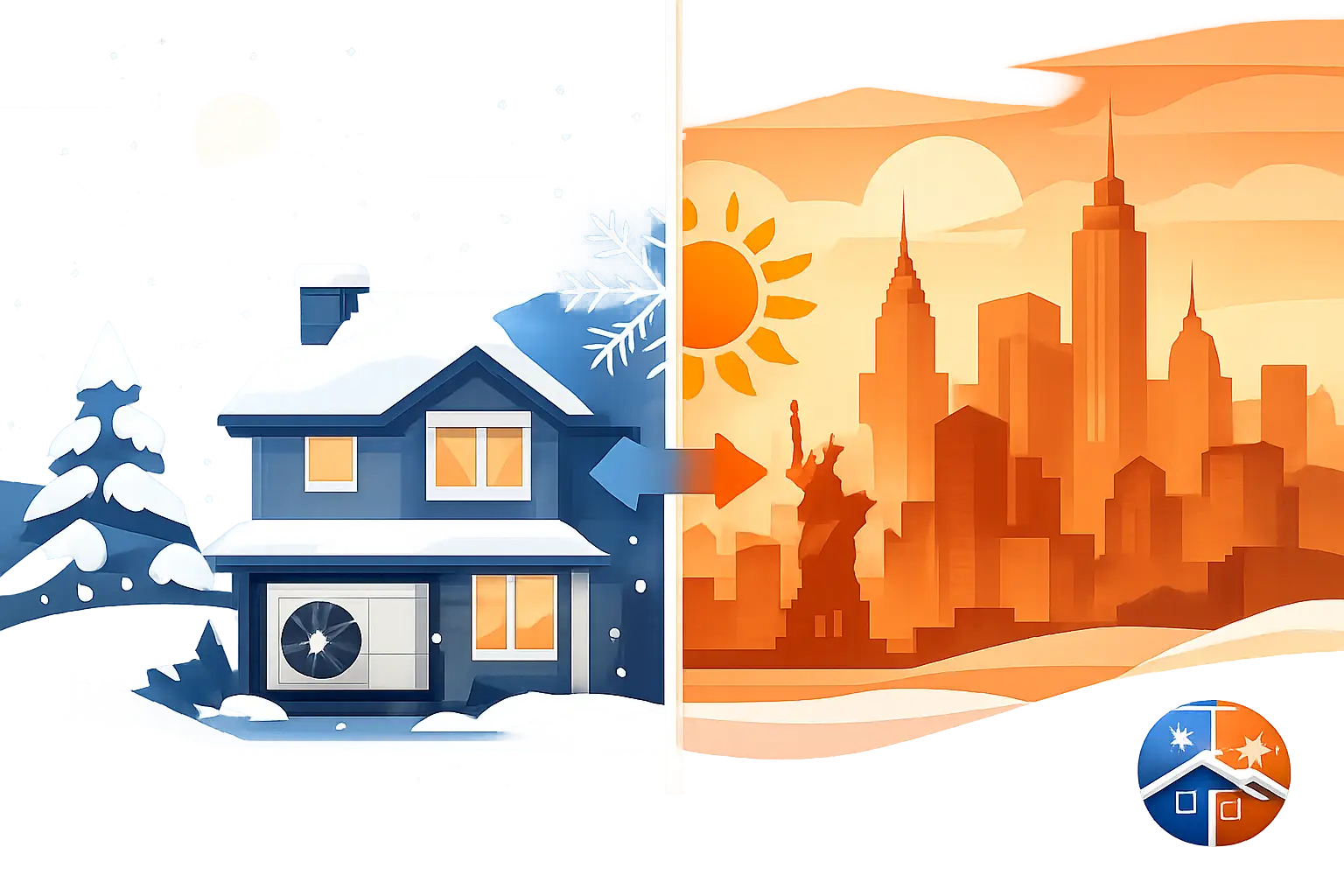
A New York cold snap can make any homeowner question their heating system. If you are asking, “can heat pumps work winter?” the short answer is yes – when the system is properly selected, installed, and maintained for local conditions. Modern cold-climate heat pumps can provide dependable heat through much of a Northeast winter, including temperatures well below freezing.
The key is understanding what a heat pump is designed to do, where its limits are, and when a backup heat source may be part of the right plan for your home or business.
Can Heat Pumps Work in Winter?
Yes. A heat pump does not create heat by burning fuel. Instead, it moves available heat from the outdoor air indoors. Even when the air feels bitterly cold, it still contains thermal energy. The outdoor unit absorbs that energy, the refrigerant carries it inside, and the indoor equipment distributes warm air throughout the space.
Older heat pumps could lose a meaningful amount of heating capacity as outdoor temperatures dropped. That history is why some New Yorkers still assume heat pumps are only practical for mild climates. Today’s cold-climate models use inverter-driven compressors and improved controls to operate efficiently in far colder weather than earlier equipment.
Many modern systems can continue heating at 0°F, and some are rated to provide useful heat at temperatures below that. Performance is not identical from one model to another, however. A system that works well in a coastal Long Island home may not be the right fit for a larger, draftier property in Westchester or a commercial space with frequent door traffic.
What Happens When Temperatures Drop?
As the outdoor temperature falls, a heat pump has less heat available to collect. The system can still run, but it may produce less heating capacity and use more electricity to meet the thermostat setting. That does not mean it has failed. It means the equipment is working harder under demanding conditions.
A correctly designed system accounts for this reality. Your HVAC contractor should calculate the building’s heat loss, not simply select equipment based on square footage. Insulation levels, window quality, ceiling height, air leaks, ductwork, occupancy, and the layout of the home all affect how much heat is needed on the coldest days.
For some properties, an all-electric cold-climate heat pump is an excellent primary heating solution. For others, a dual-fuel setup is more practical. In a dual-fuel system, the heat pump handles heating during moderate winter weather, while a gas furnace takes over when outdoor temperatures reach a preset point. The best option depends on your building, energy costs, comfort expectations, and existing equipment.
Defrost Cycles Are Normal
Winter moisture can freeze on the outdoor coil. To prevent ice buildup from restricting airflow, the heat pump periodically enters a defrost cycle. During this process, the system briefly reverses operation to melt frost from the outdoor coil.
You may see steam rising from the outdoor unit or hear a change in its sound. Both can be normal. Inside, the system may temporarily use supplemental heat to prevent a blast of cool air. A defrost cycle should be occasional and short. If the unit is constantly icing over, running for long periods without warming the building, or producing unusual noises, it needs professional attention.
The Difference Between Efficient and Comfortable
Efficiency ratings matter, but they do not tell the whole story. A heat pump can be highly efficient and still leave you uncomfortable if it is oversized, undersized, poorly installed, or connected to leaky ducts.
An oversized system may cycle on and off too often. This can reduce efficiency, create uneven temperatures, and increase wear on components. An undersized system may run continuously during a cold spell and struggle to maintain your preferred indoor temperature. Continuous operation is not automatically a problem with inverter equipment, but a home that cannot stay warm is a sign that the system or building envelope needs to be evaluated.
Installation quality matters just as much as the nameplate. Refrigerant charge, electrical connections, condensate drainage, outdoor-unit placement, airflow, and control settings all affect winter performance. For ductless mini-splits, indoor head placement is especially important because warm air needs a clear path to reach the occupied areas of the room.
When Backup Heat Makes Sense
Backup heat is not a sign that heat pumps cannot work in winter. It is a planning tool that helps protect comfort during the most extreme conditions. Electric heat strips, a furnace, boiler heat, or another approved heat source can provide added capacity when needed.
Backup heat is often a smart consideration for older homes with significant heat loss, properties in colder inland areas, buildings with existing fossil-fuel equipment in good condition, and spaces where temperature stability is critical. A property manager may also prefer backup capacity to reduce risk during a prolonged cold-weather event.
The important distinction is between supplemental heat that operates strategically and emergency heat that runs constantly. If electric auxiliary heat is coming on every day in mild weather, utility costs can rise quickly. A technician can check whether the thermostat settings, system controls, capacity, or insulation are contributing to the problem.
How to Help Your Heat Pump Perform Better in Winter
A heat pump needs steady airflow and clear outdoor access to do its job. Homeowners can support reliable winter operation with a few practical habits:
- Keep snow, leaves, ice, and stored items away from the outdoor unit. Leave open space around it so air can move freely.
- Do not cover the outdoor unit with a tarp or box. It needs airflow, and trapped moisture can create problems.
- Replace or clean indoor air filters on schedule. A restricted filter reduces airflow and can make the system work harder.
- Avoid large thermostat setbacks. Heat pumps often perform best when maintaining a steady temperature rather than recovering from a major overnight drop.
- Schedule maintenance before the heating season or as soon as you notice reduced comfort, unusual cycling, or higher-than-expected electric bills.
For ducted systems, damaged or uninsulated ducts can also waste a surprising amount of heat. For ductless systems, blocked indoor heads, dirty filters, or closed-off rooms can limit the comfort you expect from the equipment.
Signs Your System Needs Service
Call for service if your home or business is not holding temperature, the outdoor unit is covered in thick ice, or the system is frequently switching to emergency heat. Other warning signs include burning odors that do not fade quickly, repeated circuit breaker trips, loud grinding or banging sounds, water leaking indoors, and a sudden jump in operating costs.
Do not try to chip ice off the outdoor coil or force the equipment into a different mode. That can damage delicate coil fins and components. If comfort or safety is at risk, prompt service is the better choice. Rite Temp HVAC LLC provides licensed, insured heating support for homeowners and businesses that need clear answers and dependable repairs.
Are Heat Pumps a Good Choice for New York?
For many properties, yes. Heat pumps offer both heating and cooling in one system, operate quietly, and can reduce reliance on fossil fuels. They are especially appealing when replacing aging central air conditioning, adding comfort to an extension, upgrading a room that is difficult to heat, or installing ductless heating and cooling in a space without existing ducts.
Still, a heat pump is not a one-size-fits-all purchase. The right recommendation starts with an honest assessment of the building and its heating needs. A high-performance system in a well-sealed home can deliver excellent winter comfort. The same equipment in a poorly insulated building may need envelope improvements or backup heat to meet expectations.
Before choosing a system, ask for a heat-loss calculation, a clear explanation of cold-weather capacity, and an estimate that identifies whether backup heat is included. Those details matter more than a low upfront price.
A well-designed heat pump should make winter feel routine, not like a daily test of your thermostat. If your current system is struggling, a professional evaluation can identify whether a repair, maintenance visit, insulation improvement, or properly sized replacement will give you the reliable comfort your property needs.